Back-to-School Safety in South Jersey: Smart Tips for Families, Students and Drivers

Derek Doernbach, Realtor®
Published August 28, 2026 · 9 min read
A new school year brings a familiar mix of excitement and adjustment across South Jersey. Earlier mornings, changing traffic patterns, crowded school zones, new bus routes and that first-day photo on the front step all arrive at once, and the pace of daily life shifts for families everywhere from Atlantic County to the shore.
A few thoughtful precautions can go a long way. They protect children's physical safety on the way to school, their privacy online, and your own peace of mind during some of the busiest weeks of the year.
Think Before Posting the First-Day Photo
That first-day-of-school sign is a favorite tradition, but those signs can unintentionally reveal several personal details at once, including:
- Your child's full name
- School name
- Teacher's name
- Grade and classroom
- Age or birth date
- Bus number
- Favorite activities
- After-school schedule
- Your neighborhood or a recognizable home location
Here are safer alternatives that still let you celebrate the milestone:
- Use only your child's first name, or no name at all.
- Leave the school and teacher's names off the sign.
- Avoid displaying bus numbers, schedules or classroom information.
- Check the background for house numbers, street signs, school logos, vehicle license plates and other location clues.
- Disable location tagging before posting.
- Consider sharing detailed photos privately with trusted family and friends.
- Review the audience selected for each post rather than relying only on an account's default privacy setting.
- Ask older children whether they are comfortable having the photo shared.
One detail by itself may seem harmless, but several details combined can reveal far more than a parent intended. For more guidance, these official resources are worth a read:
- New Jersey Cybersecurity and Communications Integration Cell: keeping children safe online
- Federal Trade Commission: protecting your child's privacy online
When Must Drivers Stop for a School Bus in New Jersey?
Few questions come up more often around back-to-school season than who has to stop when a school bus pulls over. Here is the straightforward breakdown.
New Jersey School-Bus Stop Law: The Simple Version
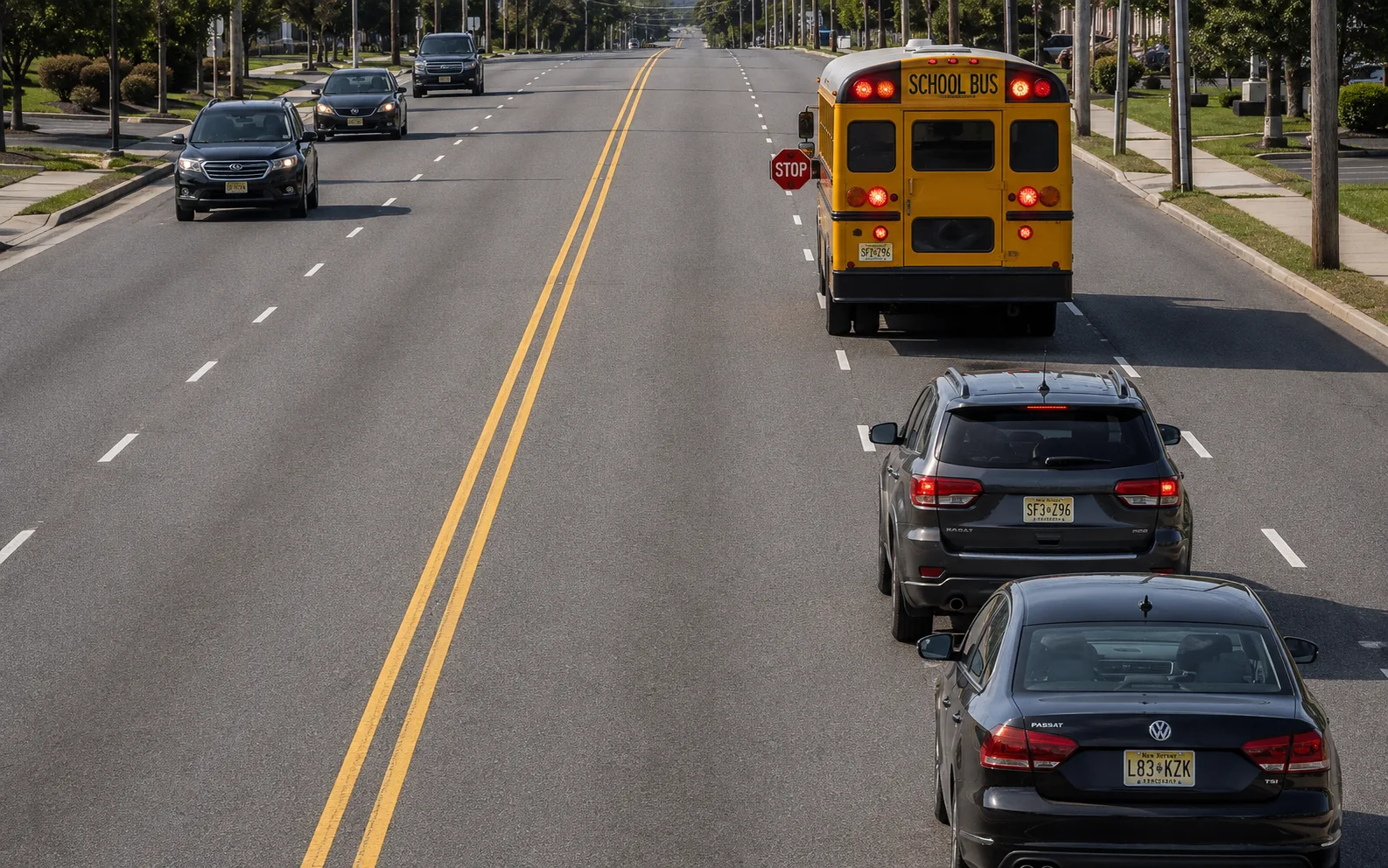
Under N.J.S.A. 39:4-128.1, when a school bus stops to receive or discharge children and displays flashing red lights, drivers on an undivided roadway who are approaching the bus from either direction must stop at least 25 feet away. They must remain stopped until the children have boarded or safely reached the side of the road and the bus's flashing red lights are no longer operating.
Undivided Road
On an undivided roadway, traffic approaching from either direction must stop at least 25 feet from the bus and remain stopped while the red lights are flashing and children are boarding or leaving.
Physically Divided Road
When roadways are separated by a safety island, median or other physical traffic-separation installation:
- Drivers traveling behind the stopped bus on the same roadway must stop at least 25 feet away.
- Drivers traveling on the opposite roadway must slow to no more than 10 mph and may not resume normal speed until they have passed the bus and any children entering or leaving it.
Painted center lines, turning lanes and painted medians are not necessarily physical traffic separations. When uncertain, drivers should prioritize safety and avoid passing.
Bus Parked at a School or Day Camp
When a bus is parked at the curb to receive children directly from, or discharge them directly into, a school, day camp or school-connected activity on the same side of the street, motorists may pass without stopping but may not exceed 10 mph.
Yellow and Red Lights
Flashing yellow lights mean the bus is preparing to stop. Slow down, increase your following distance and prepare to stop. Flashing red lights and an extended stop arm mean the bus is stopped for passengers. Stop and wait as required by law. Do not proceed merely because the stop arm has started retracting. Watch for children and wait until the red lights are no longer flashing before proceeding where the stop requirement applies.
Penalties
Improperly passing a school bus carries five New Jersey motor-vehicle points. A first offense can bring a fine of at least $100, up to 15 days in jail or 15 days of community service, or both. A subsequent offense can bring a fine of at least $250, up to 15 days in jail, or both. New Jersey law also permits license revocation in circumstances the Motor Vehicle Commission determines justify it.
For the full details, see these official references:
- N.J.S.A. 39:4-128.1: the school-bus stopping law
- New Jersey MVC Driver Manual
- New Jersey MVC Points Schedule
This is general public-safety information, not legal advice. If you have a question about a particular incident, consult the current statute or a qualified attorney.
School-Bus Safety for Children
Helping children practice safe habits at the bus stop is one of the most effective things a family can do. A few simple rules make a real difference:
- Arrive at the bus stop at least five minutes early.
- Wait at least 10 feet (or five giant steps) from the curb.
- Do not run, push or play near the roadway.
- Wait for the bus to stop completely and for the driver's signal before approaching.
- Use the handrail when boarding or exiting.
- Never walk behind a school bus.
- When crossing in front of a bus, move far enough ahead to be visible to the driver, make eye contact with the driver and wait for the signal to cross.
- Look left, right and left again before crossing.
- If an item falls near or beneath the bus, tell the driver. Never reach for it yourself.
For more detail, the National Highway Traffic Safety Administration's school-bus safety guidance is a helpful resource.
Walking and Bicycling to School
For families whose children walk or ride, a little preparation ahead of the first day builds confidence and safety. Consider these age-appropriate practices:
- Practice the route before the first school day.
- Select a route with sidewalks, crosswalks and crossing guards whenever possible.
- Cross at intersections and marked crosswalks.
- Make eye contact with drivers before crossing.
- Do not step into the street from between parked cars.
- Put phones and headphones away while crossing.
- Wear a properly fitted bicycle helmet.
- Use visible or reflective clothing and bicycle lights when lighting is poor.
- Teach children not to assume a driver sees them simply because they can see the vehicle.
- Follow the school's bicycle, scooter and helmet rules.
Younger children may not yet judge vehicle speed and distance reliably, so they should be accompanied by a responsible adult when appropriate.
A Back-to-School Reset for Drivers
Drivers can help make the first weeks safer with a simple reset. Keep this checklist in mind:
- Allow extra travel time during the first few weeks.
- Expect unfamiliar bus routes and changing pickup times.
- Reduce speed in residential areas and school zones.
- Watch between parked vehicles for children.
- Obey crossing guards.
- Avoid using a handheld phone.
- Never block a crosswalk.
- Check carefully for pedestrians and cyclists before turning.
- Back out of driveways slowly and check more than once.
- Never drive around a stopped line of traffic without first determining why it stopped.
Simple Organization Tips for Families
A calmer morning often starts the night before. These practical ideas can ease the transition:
- Move bedtime and wake-up time gradually before school begins.
- Create a designated place for backpacks, shoes, chargers and school papers.
- Pack bags and choose clothing the night before.
- Keep emergency contacts current with the school.
- Confirm transportation and authorized pickup information.
- Place a contact card inside a younger child's backpack without displaying private information externally.
- Establish a family password for unexpected pickup situations.
- Review what your child should do if a bus is missed, a ride is late or plans unexpectedly change.
- Set a consistent homework and device-charging routine.
- Make the first week lighter when possible, because children may be more tired than expected.
Online and Device Safety
Digital safety is part of back-to-school readiness too. Keep the conversation calm and practical rather than fear-based:
- Keep passwords private.
- Enable multi-factor authentication when available.
- Avoid sharing schedules and locations publicly.
- Review app permissions together.
- Discuss suspicious messages, links and friend requests.
- Establish family expectations for phones and group chats.
- Encourage children to tell a trusted adult about cyberbullying, threats or uncomfortable contact.
A Positive Start for Everyone
The first weeks of school are a shared community effort. Patience and attention from parents, drivers, students and neighbors make a real difference in how smoothly everyone gets to class and back home again.
Each of us is responsible for keeping school zones calm, bus stops safe and our children protected, both on the street and online. If this article helps one family start the year with more confidence, it has served its purpose.
Please consider sharing it with parents, grandparents, teen drivers and anyone responsible for school transportation.
New Jersey School-Bus and Back-to-School FAQs
Here are quick answers to the questions families and drivers ask most often.
Do cars traveling in both directions stop for a school bus in New Jersey?
How far must a driver stop from a school bus in NJ?
Must drivers stop on the opposite side of a divided highway?
What do flashing yellow school-bus lights mean?
What is the penalty for passing a stopped school bus in New Jersey?
What information should parents leave off first-day-of-school signs?
How early should children arrive at a school-bus stop?
Should children walk in front of or behind a school bus?
Looking for more useful South Jersey information? Explore DerekDoernbach.com for community guides, local market updates, homeowner resources and real estate information from across South Jersey.
Popular places to keep exploring:
South Jersey and Jersey Shore area guides Current South Jersey market update South Jersey property tax appeal and savings guide About Derek Doernbach
Century 21 Action Plus Realty | Your Jersey Shore Team
Derek Doernbach is a South Jersey and Jersey Shore Realtor with Century 21 Action Plus Realty and the team lead of Your Jersey Shore Team. In addition to helping people buy and sell homes throughout South Jersey, Derek shares practical local information and resources that help residents stay informed and connected to their communities. Licensed in New Jersey (1645208).