How to Buy a Condo at the Jersey Shore: A Buyer's Guide for Atlantic County

Derek Doernbach, Realtor®
Published October 22, 2026 · 12 min read
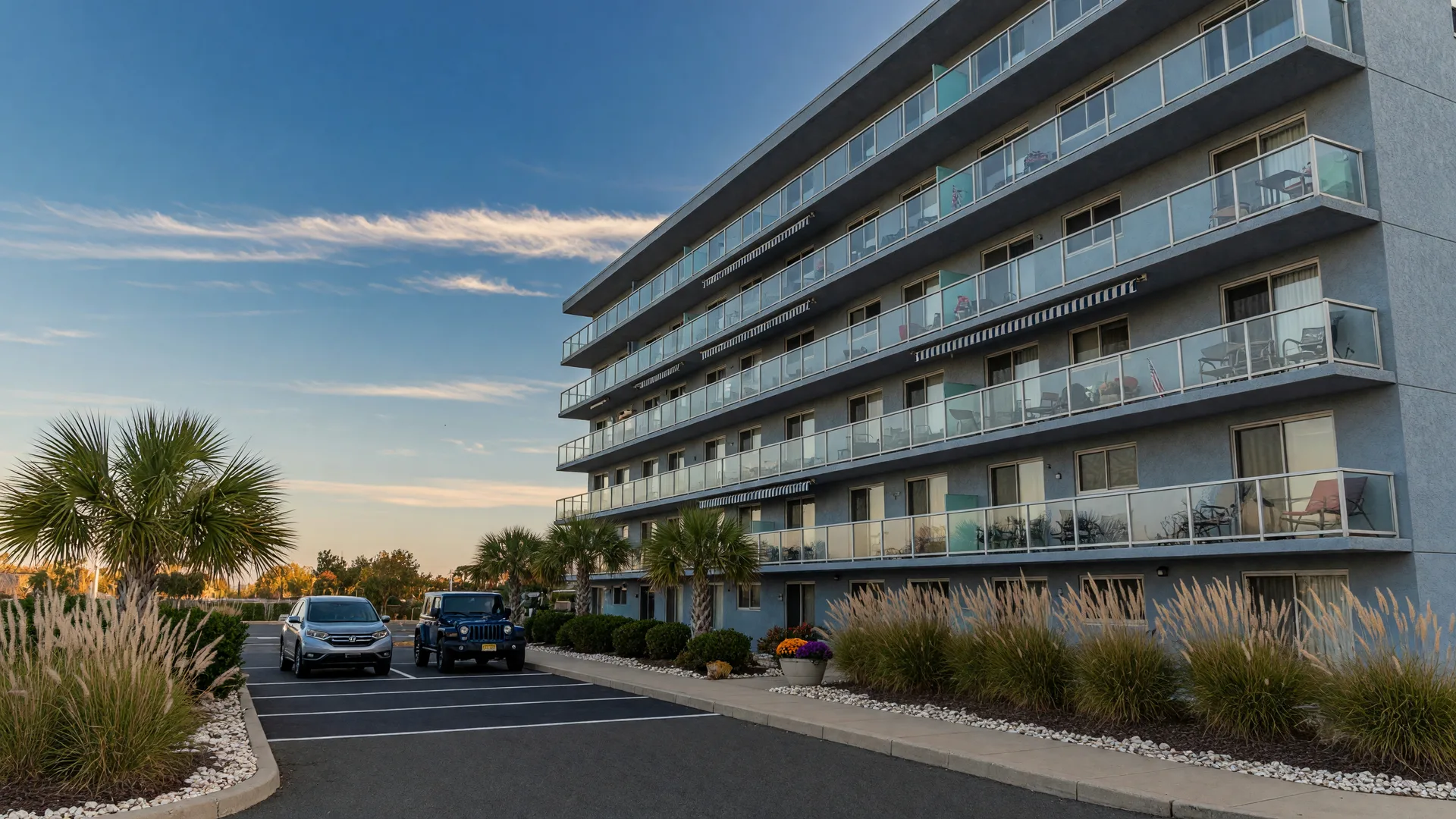
You can buy a condo at the Jersey Shore, and for many buyers it is the most practical way onto the water: a lower purchase price than a single-family house, no exterior maintenance, and access to pools, gyms, bayfront decks, and beach-block locations that would cost far more if you owned the whole building. But a condo purchase is really two purchases at once. You are buying the unit you live in and the homeowners association you are buying into, and at the shore that second purchase brings flood insurance, HOA finances, and building-level financing rules that single-family buyers never think about.
This guide is for buyers looking at condos and townhouses in Atlantic County and the Jersey Shore, from Brigantine and Atlantic City to Ventnor, Margate, Longport, and Somers Point, plus the mainland communities of Egg Harbor Township, Galloway, Northfield, and Linwood. If you are a first-time buyer, an empty nester downsizing, an investor, or someone relocating to the shore, here is the full checklist: what documents to review, how financing differs, what flood insurance costs, and which questions to ask before you sign.
Key Takeaways
- You are buying the association as much as the unit: the resale package, HOA finances, reserves, and pending special assessments can make or break a shore condo purchase
- Condo financing is project-based: FHA-approved buildings must be recertified every three years, and Fannie Mae and Freddie Mac changed their condo review rules effective August 3, 2026
- Flood insurance is mandatory for most federally backed loans in FEMA flood zones, and shore condo coverage works through a building master policy plus your own contents policy
- New Jersey gives you a three-business-day attorney review after a signed contract, so an attorney can pull the condo documents apart before you are locked in
- Verify the building's approval status with your lender before you spend money on an appraisal or inspection, not after
Why Buying a Condo at the Shore Is Different from Buying a House
With a single-family home, you evaluate the property: the roof, the systems, the lot, the neighborhood. With a condo, you evaluate the property and the corporation that runs it. The HOA sets the rules, holds the reserves, carries the master insurance, and decides whether the building gets a special assessment when a roof or elevator fails. A well-run association is a quiet asset. An underfunded one can add a five-figure special assessment to your first year of ownership.
At the Jersey Shore, this matters more than almost anywhere else in New Jersey. Older beach buildings face salt-air corrosion, wind-driven storm damage, and roofs and decks that get pounded every summer. Flood zones add insurance layers. Pool decks, bulkheads, and elevators are expensive common elements. The financial health of the association is not paperwork you can skim in five minutes; it is the most important part of the purchase.
Where Condos and Townhouses Dominate in Atlantic County
Attached housing is a major slice of the market in most Atlantic County shore towns, and each one has its own character:
- Atlantic City: high-rise oceanfront and marina-area condos with the most amenities anywhere in the county
- Ventnor, Margate, and Longport: beach-block and bayfront condo and townhouse options along Absecon Island
- Brigantine: garden-style condos and townhome communities across a barrier island where nearly the whole island sits in FEMA flood zones
- Somers Point: bayfront townhomes along Great Egg Harbor Bay with quick access to the beaches and the causeway
- Egg Harbor Township, Galloway, Northfield, and Linwood: villa-style and garden condos on the mainland, often with lower HOA fees and more parking than island buildings
Fully updated guides for each of these communities live on the Atlantic County Areas page, with flood zone, school, tax, and market detail for buyers.
The New Jersey Condo Paperwork You Must Review Before You Make an Offer
New Jersey's Condominium Act (N.J.S.A. 46:8B) requires a condo seller to provide a certificate showing the amount of unpaid assessments for the unit. In practice, the full resale package assembled by the association or its management company includes far more:
- Master deed, bylaws, and the rules and regulations, with amendments
- Current operating budget and recent financial statements
- Reserve study and current reserve balance
- Master insurance certificate, including the flood policy
- Disclosure of special assessments, pending litigation, and known repairs
- The certificate of unpaid assessments, which lenders and title companies will also request at closing
If you are buying new construction from a developer, different rules apply. Under New Jersey's Planned Real Estate Development Full Disclosure Act (PREDFDA), the developer must register the offering with the New Jersey Department of Community Affairs and give you a current Public Offering Statement on or before the contract date. That statement covers the project budget, planned assessments, warranties, and phasing, so read it with your attorney before committing.
Financing a Shore Condo: Conventional, FHA, and VA Rules
Here is the fact that surprises most first-time condo buyers: your lender approves you, and then it has to approve the building. Condo mortgages are project-based loans. If the building does not meet the lender's requirements, the purchase dies even with perfect credit and a fat down payment.
Conventional loans and the 2026 rule change
Fannie Mae and Freddie Mac ran updated condominium review procedures for applicable transactions starting August 3, 2026. The details matter more to your lender than to you, but the practical point is this: the project's insurance, finances, litigation, and owner-occupancy all get reviewed before your loan can close, and not every building passes. I covered the mechanics in depth in the guide to non-warrantable condo mortgages in New Jersey, including what to do when a project does not meet the standard guidelines.
FHA loans and approved projects
FHA is popular with first-time buyers because of its 3.5% down payment, but the building must be on HUD's approved condominium list, or qualify for a Single Unit Approval. Under current HUD guidance, an FHA-approved project generally needs at least 50% owner-occupied units, no more than 15% of units more than 60 days behind on HOA assessments, and healthy reserves. Approval lasts three years and must be recertified, so a building can fall off the list and complicate your loan. If a project is not approved, Single Unit Approval is available for existing projects with at least five units, subject to FHA concentration limits: no more than 10% of units with FHA loans in projects of ten or more units, and a maximum of two units in smaller projects.
Check a building's approval status on HUD's list as part of your pre-offer research, and confirm with your lender that the project will work for the loan program you plan to use. VA loans have their own project requirements too, which I cover in the South Jersey VA loan guide.
Flood Insurance: The Question Every Shore Condo Buyer Has to Ask
Federal law makes flood insurance mandatory when a federally backed or regulated mortgage secures a property in a FEMA Special Flood Hazard Area, the zones that start with A or V. Most barrier-island communities in Atlantic County qualify, and the requirement stays with the loan for its entire life even if flood maps change later.
For condos, flood coverage works in two layers. The association carries a master policy, typically a National Flood Insurance Program Residential Condominium Building Association Policy (RCBAP), which insures the building, common elements, and unit interiors depending on how the condo declaration is written. Unit owners then buy their own contents policy for furniture, appliances, clothing, and personal property.
Two things to check before you offer: first, whether the association's master policy is strong enough for the lender (some buildings fail financing solely on weak flood coverage), and second, what your own contents-plus policy will cost. Under FEMA's Risk Rating 2.0, premiums are property-specific, so a unit's actual flood premium depends on the building's elevation, claims history, and distance from the water, not just its zone letter. I broke down the full picture in Flood Insurance and Flood Zones at the Jersey Shore.
Expect flood insurance questions in every Brigantine condo purchase and in most of Longport and Margate, where nearly all of the island sits in mapped flood zones. An experienced shore lender or agent can help you estimate the true cost before you commit.
The Full Cost of a Condo: HOA Dues, Special Assessments, and Closing Costs
The list price is only the beginning. Before you make an offer, build a complete monthly and closing cost picture:
- HOA dues: at the shore these commonly cover insurance, common-area maintenance, trash, pools, and sometimes heat and water. High annual increases are a red flag worth asking about.
- Special assessments: one-time charges for roof replacements, bulkhead repairs, or storm damage. Ask whether the association has one planned or pending.
- Closing costs: attorney fees, title insurance, lender charges, appraisal, and the seller's resale certificate fee are typical. A lender's Loan Estimate will itemize them.
- Property taxes and insurance prorations at closing, plus any municipal occupancy or transfer requirements in your town.
New Jersey gives you an extra layer of protection: after a contract is signed, you and the seller both have three business days for attorney review, and either attorney can void the deal in writing during that window. That is the moment to have your attorney tear through the resale package. My South Jersey guide to the three-day attorney review explains exactly how it works and what Opinion 26 means for the process.
Questions to Ask Before You Make an Offer on a Shore Condo
- Is the building FHA-approved right now, and when does the approval expire?
- What is the current reserve balance, and does the reserve study show a funded plan for major repairs?
- Are any special assessments or large capital projects (roof, elevator, bulkhead, pool deck) planned or pending?
- Is there pending litigation involving the association?
- What does the master flood policy cover, what is the deductible, and how much would my contents policy cost?
- Can I rent the unit out, and are there rental caps, minimum lease terms, or board approval rules?
- Are pets, parking, and storage all defined in the rules, and do they fit how I plan to live?
- What are the current HOA dues, the last three years of increases, and what do dues cover?
Every one of these answers should come in writing from the association or management company, not from the seller's word of mouth.
What Happens After Your Offer Is Accepted
Once a price is agreed, the clock starts on attorney review, and you should use every day of it. Your attorney and lender will order the resale certificate and review the full package while your home inspection runs. A condo inspection is slightly different from a house inspection: less focus on the roof and exterior, more focus on the unit's systems, water intrusion, mold and humidity history, and what the HOA is responsible for versus what falls on you. In older shore buildings, an inspection that checks for signs of past flooding and moisture is worth every dollar.
The appraisal then confirms value, and the lender completes the project review. Expect the closing to include payoff of the seller's outstanding assessments, a proration of taxes and HOA dues, and a fresh estoppel or assessment certificate. The whole timeline runs about 30 to 45 days for a well-prepared cash or conventional buyer, with a little more time built in for shore-town municipal requirements and flood insurance onboarding.
Why This Matters for Shore Buyers
A condo is often the entry point to a shore address: first-time buyers who want into a beach town without a million-dollar budget, empty nesters trading a house and a lawn for a lock-and-leave unit, professionals buying a weekend place, and investors looking for a rental with an on-site management-friendly building. Each buyer type reads the same documents differently. An investor cares about rental caps and board approval. A full-time owner cares about noise, parking, and reserve-funded repairs. A weekend owner cares about security, the master policy, and how the building handles storms.
Buying the right building is at least as important as buying the right unit. A strong association protects your value, your insurance costs, and your peace of mind through hurricane season. A weak one can hand you a special assessment the month after you move in. That is why experienced shore agents guide buyers through the documents before the offer, not after.
Frequently Asked Questions
Can I get an FHA loan for a condo at the Jersey Shore?
Yes, if the building is on HUD's approved condominium list or qualifies for Single Unit Approval, and if it meets owner-occupancy, delinquency, and reserve requirements. Check the project status with your lender before you make an offer.
Do I have to buy flood insurance for a condo in a shore flood zone?
Yes, when your mortgage is federally backed or regulated and the unit is in a FEMA Special Flood Hazard Area (zones beginning with A or V). The association's RCBAP master policy covers the building; you still need contents coverage for your personal property.
What is a resale certificate and why does it matter?
It is the package the association prepares on a resale, including unpaid assessments, budget, financials, reserves, rules, and insurance. Your lender, title company, and attorney all rely on it, and problems in it can delay or kill the closing.
Are HOA dues negotiable when I buy a condo?
No, the association sets the dues and you cannot negotiate them as part of the purchase. You can negotiate the price with the seller based on the dues, an upcoming special assessment, or needed repairs the documents reveal.
Can I rent out a condo I buy at the shore?
Only if the association's rules allow it. Many shore associations cap the share of rentals, require minimum lease terms, or require board approval, and short-term rental rules also vary by town. Read the bylaws and ask in writing before you commit.
Should I buy a condo or a single-family house at the shore?
It depends on your budget, how you plan to use the property, and how much maintenance you want. A condo offers lower entry cost and less upkeep; a house offers more space, privacy, and control. A buyer consultation can help you compare real options in the towns you like.
Next steps for your shore condo search
Do not fall in love with a unit and then discover the building cannot be financed the way you planned. I help buyers across Atlantic County and the Jersey Shore sort through buildings, budgets, and flood zones before they make an offer, so the first surprise is a good one.
Ask about buying in a specific shore town, getting a read on a building's condo documents before you offer, or estimating the true all-in cost of a unit with HOA dues and flood insurance. No pressure, just a clear plan.
Sources & References
- New Jersey Department of Community Affairs: Planned Real Estate Development Program (PREDFDA)
- N.J.A.C. 5:26, Planned Real Estate Development regulations
- HUD: FHA Condominiums (project approval, recertification, Single Unit Approval)
- HUD: FHA Single Unit Approval required documentation (February 2025)
- FEMA: NFIP Residential Condominium Building Association Policy (RCBAP) SFIP
- FEMA/NFIP: Summary of Coverage, Residential Condominium Buildings
Derek Doernbach, REALTOR®
Century 21 Action Plus Realty | Your Jersey Shore Team
DerekDoernbach.com | Serving the Jersey Shore and Southern New Jersey since 2016
This article provides general educational information, not legal, lending, or insurance advice. Condo financing rules, FHA project approvals, flood maps, and association conditions change, and every building is different. Confirm the specifics of your purchase with your lender, attorney, and qualified insurance professional.