How to Sell a Waterfront Home at the Jersey Shore: A Seller's Guide for Atlantic and Cape May Counties

Derek Doernbach, Realtor®
Published August 3, 2026 · 14 min read
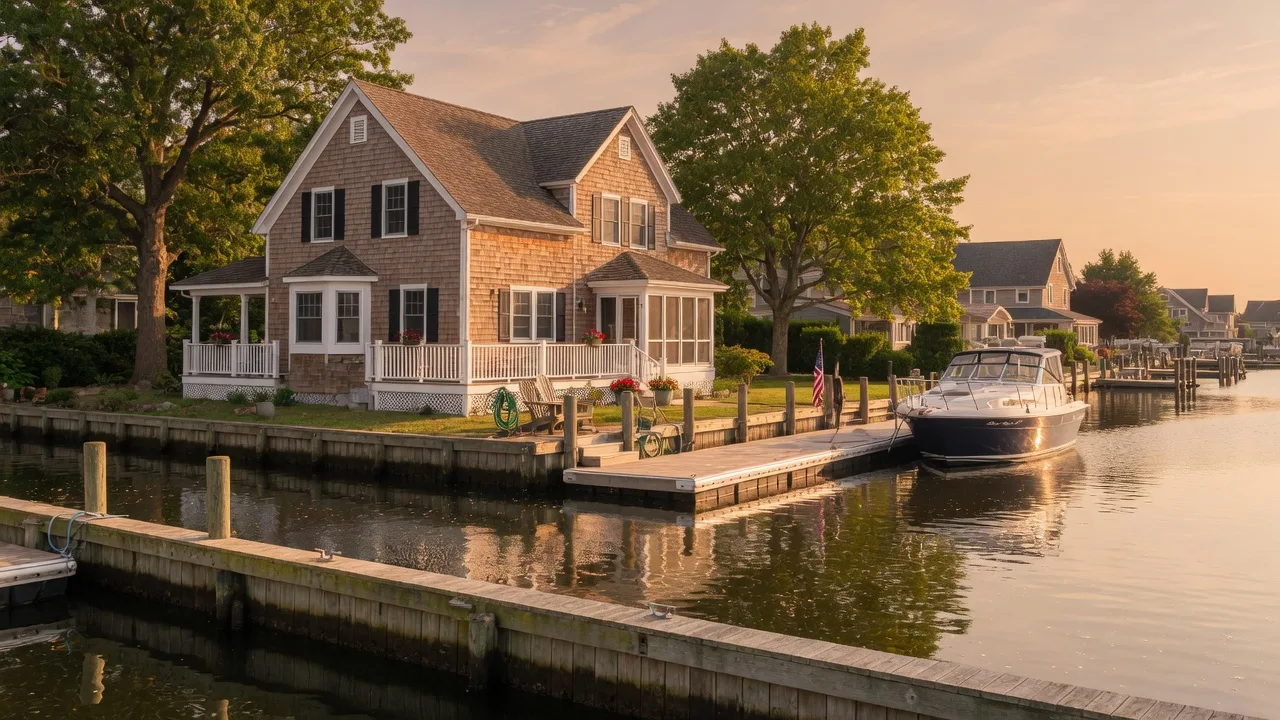
If you own a waterfront home along the Jersey Shore — whether it is an oceanfront property in Margate, a bayfront bungalow in Somers Point, a lagoon-front home in Brigantine, or a canal-front property in Ventnor — you already know why people pay a premium to live here. The water views, the private dock, the sound of the tides, and the easy access to the Atlantic Ocean and back bays make these some of the most desirable properties in New Jersey.
But selling a waterfront home is different from selling a standard suburban property. Flood insurance, elevation certificates, bulkhead condition, dock rights, tidelands claims, and municipal regulations all come into play. Buyers ask harder questions, lenders have stricter requirements, and the inspection process covers items most inland sellers never think about.
This guide is for homeowners in Atlantic County and Cape May County who own waterfront, bayfront, canal, lagoon, or oceanfront property and are thinking about selling. Whether you are selling a primary residence, a second home, an inherited shore property, or an investment property, here is what you need to know to sell with confidence.
Key Takeaways
- Your flood zone (VE, AE, or X) directly affects buyer financing, insurance costs, and offer price — have your elevation certificate ready before listing
- New Jersey's tidelands laws mean the state may hold a claim on portions of your property — a tidelands search before listing prevents closing delays
- Bulkhead condition and dock permits are major buyer concerns — repairing a failing bulkhead before listing can strengthen your negotiating position
- New Jersey's flood disclosure law (effective March 2024) requires sellers to disclose flood zone status, past claims, and FEMA assistance — noncompliance creates legal risk
- Professional marketing — golden-hour photography, drone footage, and Matterport 3D tours — is essential for attracting serious waterfront buyers
The Waterfront Market at the Jersey Shore in 2026
The waterfront market along the South Jersey shore is strong heading into the second half of 2026. Both Atlantic County and Cape May County are seeing tight inventory, steady buyer demand, and rising prices — but the conditions are not uniform across all waterfront segments.
Cape May County
Cape May County is the premium waterfront market in South Jersey. The overall median home sale price in the county reached approximately $694,000 in May 2026, up 19.7% year-over-year according to NJ Realtors data. For waterfront properties specifically, the median listing price hovers around $875,000. Premium oceanfront segments on Seven Mile Island (Avalon, Stone Harbor) continue to see especially strong demand, with quality oceanfront homes holding values above $2 million.
Sellers in Cape May County are receiving approximately 98.8% of list price on average, and homes are turning over in roughly 62 days. Supply sits at about 4.0 months — below the 5-6 months that signals a balanced market. This is good news for sellers, but the longer days-on-market compared to Atlantic County reflects the higher price points and the more deliberate pace of luxury waterfront transactions.
Atlantic County
Atlantic County's waterfront market is more affordable and faster-moving. The median waterfront listing price in the county is approximately $399,000, with inventory sitting at roughly 3.0-3.8 months of supply. Homes typically sell in about 21 days at sold-to-list ratios near 97.7%.
The Atlantic County waterfront market benefits from a wider range of property types — from bayfront homes in Somers Point and Brigantine to canal-front properties in Ventnor and Margate, to lagoon homes in the back-bay areas of Atlantic City. This variety gives buyers more entry points and keeps inventory moving quickly at most price levels.
Bottom line: Both counties favor sellers in 2026, but waterfront homes require extra preparation. The sellers who invest in getting their property ready — flood documentation in order, bulkhead in good shape, disclosures prepared — are the ones who command the highest offers and the shortest timelines.
Step 1: Know Your Flood Zone and Insurance Costs
Flood insurance is the single most important topic for sellers of waterfront Jersey Shore properties. Buyers are asking about it earlier in the process than ever before, and underwriting guidelines from FHA, VA, and conventional lenders all address flood zone requirements.
FEMA Flood Zone Designations for South Jersey Shore Properties
The FEMA flood zone designation for your property directly affects the buyer's financing options and insurance costs. Here is how the zones break down for waterfront properties in Atlantic and Cape May Counties:
- Zone VE — Coastal high-hazard areas subject to wave action (waves 3 feet or higher). This is the most common designation for oceanfront and barrier-beach properties in both counties. Mandatory flood insurance purchase requirements apply, and premiums are the highest in this zone.
- Zone AE — High-risk flood areas with a 1% annual chance of flooding (100-year floodplain). Found along back-bay areas, tidal rivers, and near but not directly on the oceanfront. Still requires flood insurance with a federally backed mortgage.
- Zone X (shaded) — Moderate-risk areas with a 0.2% annual chance of flooding (500-year floodplain). Flood insurance is not federally required but is recommended, especially for waterfront buyers.
You can look up your property's specific flood zone on the FEMA Map Service Center at msc.fema.gov. Enter your property address to see the current Flood Insurance Rate Map (FIRM) panel for your location.
Flood Insurance Costs Under Risk Rating 2.0
FEMA's Risk Rating 2.0 methodology is now fully in effect. Rather than pricing flood insurance based solely on flood zone, premiums are now individually calculated based on property-specific factors — distance to water, flood frequency, flood type, replacement cost, and first-floor elevation relative to base flood elevation (BFE).
The statewide NFIP median premium in New Jersey is approximately $953 per year, but actual costs for waterfront properties at the Jersey Shore range widely:
- Low-risk inland properties (Zone X): under $400/year
- Moderate-risk waterfront: $1,000-$2,500/year
- High-risk waterfront (VE/AE zones, oceanfront, or low-elevation bayfront): $2,500-$5,000+/year
Having your elevation certificate ready before listing is one of the smartest things you can do. A home built above BFE can qualify for substantially lower premiums, and showing prospective buyers the actual elevation data removes uncertainty that might otherwise reduce their offer.
Step 2: Understand Tidelands and Riparian Rights
This is the issue most waterfront sellers know nothing about — and it can derail a closing if ignored. New Jersey has unique tidelands laws that give the state ownership of lands currently or formerly flowed by the mean high tide of a natural waterway.
What Is a Tidelands Claim?
Under the New Jersey Tidelands Act (N.J.S.A. 12:3-1 et seq.), the State of New Jersey owns all lands that were under water at mean high tide at any point in history. This means that even property that has been filled in, built over, or bulkheaded may still have a state claim against it. The state's claim creates what is called a cloud on title — a legal encumbrance that must be resolved before or during a sale.
Title companies typically conduct a tidelands search as part of the standard title insurance process for waterfront properties in Atlantic and Cape May Counties. If a claim is found, the seller (or buyer, by negotiation) must resolve it through one of these mechanisms:
- Riparian Grant — A one-time purchase of formerly flowed tidelands from the state. This permanently clears the title for areas that are no longer under water.
- Tidelands License or Lease — For areas still under water (docks, bulkhead extensions, piers), the property owner must get a short-term rental agreement from the state. These are not ownership and must be kept current.
The 2026 NJ Supreme Court Ruling on Tidelands
On March 18, 2026, the New Jersey Supreme Court unanimously ruled in In re P.T. Jibsail Family Limited Partnership that the Tidelands Resource Council (TRC) has the authority to set or modify pierhead lines on a case-by-case basis during tidelands license reviews. This means the TRC can adjust boundary lines for individual properties, potentially affecting dock extensions and waterfront improvements. Property owners can no longer assume that an existing dock or pier configuration is automatically grandfathered.
What this means for sellers: If your property has a dock, pier, or bulkhead extension, it is worth checking whether you have current tidelands documentation before listing. A tidelands search while you are preparing to sell gives you time to resolve any issues rather than scrambling during attorney review.
Step 3: Prepare Your Waterfront Property for the Market
Waterfront buyers are not just buying a house — they are buying access to the water, the views, and the lifestyle. The properties that command the highest prices are the ones that look ready for all three from the first showing.
Bulkhead and Dock Condition
For bayfront, canal, and lagoon properties, the bulkhead is the single most important structural feature. Buyers will ask about its age and condition. A bulkhead in good condition is a selling point. A failing bulkhead will become a negotiation item at best and a deal-breaker at worst.
Bulkhead replacement costs at the Jersey Shore typically range from $300 to $500 per linear foot, depending on materials (vinyl or wood) and access. A new vinyl bulkhead with a 25-30 year lifespan is generally preferred by buyers and can add significant value to the property. If your bulkhead is showing signs of age — leaning, cracking, or visible rot on wood — getting a bulkhead contractor's assessment before listing is smart.
The same goes for docks, piers, and boat lifts. Buyers want to know whether the dock is structurally sound, whether the pilings are in good shape, and whether any permits or licenses are in place. Having your dock documentation organized and available shows buyers that the property has been professionally maintained.
Exterior Maintenance and Curb Appeal from the Water
Waterfront homes face harsher conditions than inland properties. Salt air, humidity, and coastal storms accelerate wear on paint, siding, roofing, decks, and railings. Buyers notice peeling paint, rusted fixtures, weathered decks, and overgrown landscaping — and they interpret those signs as indicators of deferred maintenance that could mean bigger problems.
Your property's water-facing side is just as important as the street-facing side. Buyers arriving by boat or looking at drone footage will see every detail. Fresh paint, power-washed siding, trimmed landscaping, and clean windows make a strong first impression — from every angle.
Elevation Certificate and Flood Compliance
If you do not already have an elevation certificate, this is the time to get one. A licensed surveyor or engineer can prepare the certificate, which documents:
- The elevation of your home's lowest floor relative to BFE
- Your flood zone designation
- Whether the home has proper flood vents below BFE
Homes built above BFE can qualify for substantially lower flood insurance premiums. Having this documentation ready to share with serious buyers removes a major source of uncertainty and strengthens your negotiating position.
Step 4: Comply with New Jersey's Flood Disclosure Law
Effective March 20, 2024, New Jersey law (S3110/A4783) requires all sellers of residential property to provide buyers with specific flood-related disclosures as part of the Property Condition Disclosure Statement. This is not optional — and waterfront sellers face the most scrutiny under this law.
You are required to disclose:
- Whether the property is located in a FEMA Special Flood Hazard Area (1% annual chance, or 100-year floodplain) or a 0.2% annual chance (500-year) floodplain
- Whether you have ever filed a flood damage claim with any insurance provider
- Whether you have received FEMA disaster assistance for flood damage to the property
Failure to comply with the flood disclosure law creates legal exposure for sellers. If you have owned the property for many years and are unsure about any of these items, your Realtor can help you research the documentation. Most insurance carriers can provide claim history, and the FEMA Map Service Center can confirm the current flood zone designation.
Step 5: Price and Market Your Waterfront Property
Waterfront properties require a more sophisticated marketing approach than standard homes. The buyer pool is smaller, the price point is higher, and buyers often live outside the immediate area — so your marketing needs to reach them and convince them to make the trip.
Pricing for the Waterfront Premium
Pricing a waterfront home requires understanding the premium your specific location commands. A bayfront home in Somers Point with deep-water dock access is priced differently than a canal-front property in Ventnor with shallow-water access, even if the houses are similar. Factors that affect waterfront pricing include:
- Water access — deep-water vs. shallow-water dock, direct bay access vs. canal-only
- Views — unobstructed vs. partially obstructed, wide vs. narrow waterways
- Bulkhead condition — new vinyl bulkhead vs. aging wood
- Elevation — homes built above BFE command a premium
- Location — oceanfront, bayfront, canal, lagoon; proximity to inlets and marinas
Marketing Beyond the MLS
A standard MLS listing and a few phone photos will not attract premium offers for a waterfront property. The most effective marketing for waterfront homes includes:
- Professional photography during golden hour — capturing the water views, light, and outdoor living space at their best
- Aerial drone photography and video — showing the property's relationship to the water, the dock, and the surrounding shoreline
- Matterport 3D Digital Twin tours — allowing remote buyers to walk through the entire property, including the dock and exterior spaces, from anywhere
- Targeted digital advertising — reaching second-home buyers, relocation buyers, and investors in the greater NY/NJ/PA market who are specifically looking for Jersey Shore waterfront
I use Matterport 3D tours, professional aerial photography, and AI-enhanced listing marketing to help waterfront properties stand out in today's market. When a buyer can see the dock, the water depth, the view, and the layout from their living room before ever visiting in person, they arrive at the showing ready to make a serious offer.
Frequently Asked Questions About Selling Waterfront Homes at the Jersey Shore
How do I get an elevation certificate for my waterfront property?
A licensed land surveyor or professional engineer can prepare an elevation certificate. The cost typically ranges from $300 to $800 depending on the complexity of the property. The surveyor will measure the elevation of your home's lowest floor, the top of the foundation, and the ground adjacent to the structure, then compare these measurements to the BFE for your area. Your Realtor can recommend surveyors who have experience with Jersey Shore waterfront properties.
Do I need a survey to sell my waterfront home?
Not always, but a recent survey is strongly recommended. Waterfront property boundaries can be complex — property lines may extend to the bulkhead, to the mean high-water line, or to a specific point in the water. Buyers and their lenders often want a survey to confirm what is included in the sale. If you already have a survey, make sure it is current and available for the buyer's due diligence.
What is the best time of year to sell a Jersey Shore waterfront home?
The strongest selling window for waterfront properties is typically March through June. Listing during late winter or early spring gives you the best chance of capturing buyers who want to enjoy the property during the upcoming summer season. However, well-priced and well-marketed waterfront homes can sell year-round — especially in markets like Margate, Ventnor, and Brigantine where demand consistently outpaces supply.
What if my bulkhead needs replacement? Should I fix it before selling?
This depends on your timeline, budget, and the condition of the bulkhead. If the bulkhead is actively failing, most buyers will factor the full replacement cost into their offer. If you have the time and resources, replacing it before listing typically results in a higher net sale price. I can help you run the numbers: what the repair costs, what the home sells for after the repair, and what it would sell for as-is. That way you make an informed decision, not a guess.
Do I need to disclose past flood damage even if I already fixed it?
Yes. Under New Jersey's flood disclosure law, you are required to disclose whether you have ever filed a flood damage claim with any insurance provider, regardless of whether the damage was repaired. Full disclosure protects you from future legal claims and builds trust with the buyer. If the repairs were properly completed and documented, most buyers will move forward without issue.
What municipal inspection requirements apply to waterfront home sales?
Municipal inspection requirements vary by town in both Atlantic and Cape May Counties. Some towns require a certificate of occupancy for resale; others require only a smoke detector and CO detector certification. Many shore towns have additional requirements specific to waterfront properties. Your Realtor can look up your town's specific ordinance so you know exactly what is required before listing.
If you are thinking about selling a waterfront property in Atlantic County or Cape May County — whether it is an oceanfront home in Margate, a bayfront property in Somers Point, a canal home in Ventnor, or a lagoon property in Brigantine — I can help you understand your home's value, prepare your property, and create a marketing plan that reaches the right buyers. Let's talk about your situation.
Derek Doernbach, Realtor®
Century 21 Action Plus Realty | Your Jersey Shore Team
Derek has been helping South Jersey families buy and sell homes since 2016. He has closed 192 transactions and earned the New Jersey Realtors® Circle of Excellence Award every year since 2019. He helps waterfront homeowners throughout the Jersey Shore navigate property sales, including oceanfront, bayfront, canal, and lagoon properties in Atlantic County and Cape May County. Licensed in New Jersey (1645208).
Sources and References
- NJ Realtors — May 2026 Market Data for Cape May County and Atlantic County
- Redfin — Waterfront Home Listings, Atlantic County and Cape May County (accessed July 2026)
- FEMA Flood Map Service Center — msc.fema.gov (accessed July 2026)
- New Jersey Flood Insurance Cost Guide 2026 — FEMA Risk Rating 2.0 data
- New Jersey Tidelands Act — N.J.S.A. 12:3-1 et seq.
- In re P.T. Jibsail Family Limited Partnership — NJ Supreme Court, March 18, 2026
- New Jersey Flood Disclosure Law — S3110/A4783, effective March 2024
- NJDEP Watershed & Land Management — Tidelands Program
- ProdigyRE — Selling a Waterfront Home in Forked River, NJ (July 2026)
- WolfCRE — Beware of the Riparian Claim on NJ Waterfront Properties