Fall Pests in South Jersey: What Homeowners Should Watch For
By Derek Doernbach | Your Jersey Shore Team
Published September 30, 2026

Autumn brings cooler evenings, falling leaves, and a changing mix of insects and other visitors around our homes.
Stink bugs may gather on siding. Yellowjackets can become persistent around outdoor meals. Spotted lanternflies remain active and begin leaving egg masses behind. Mice may seek shelter, while ticks remain a concern during yard work.
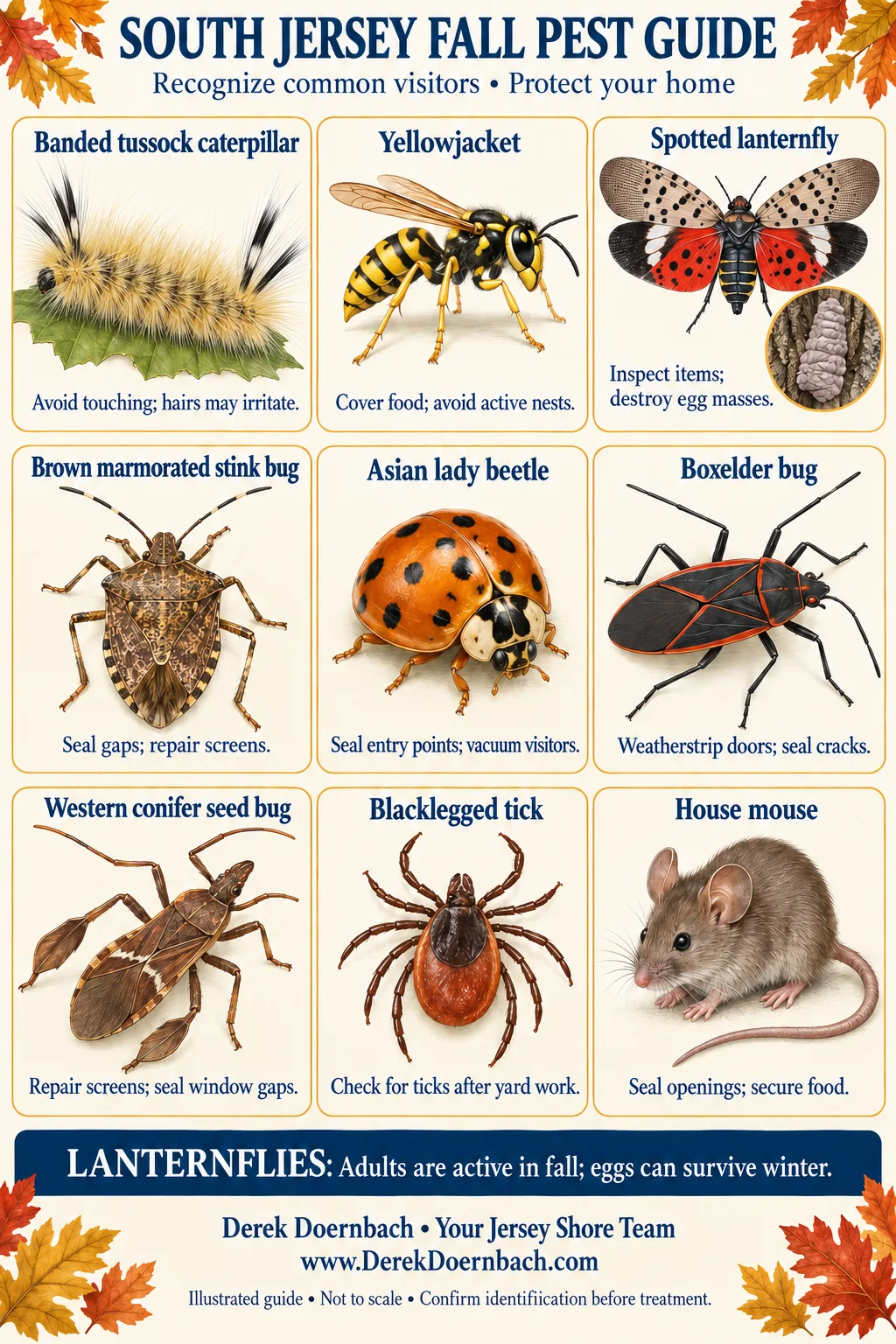
Common fall pests and visitors in South Jersey include yellowjackets, spotted lanternflies, stink bugs, Asian lady beetles, boxelder bugs, western conifer seed bugs, ticks, and mice. Fuzzy caterpillars may also attract attention on porches, fences, and trees.
Which ones you encounter depends on weather, nearby vegetation, and your property's condition. For homeowners across Atlantic, Cape May, Ocean, Burlington, Camden, Gloucester, Salem, and Cumberland counties, prevention begins with recognizing the visitor and choosing an appropriate response.
What Is That Fuzzy Yellow Caterpillar?
A fuzzy pale-yellow caterpillar with long black-and-white hair tufts may be a banded tussock moth caterpillar (Halysidota tessellaris). Similar species exist, so a photograph alone does not provide a definitive identification.
Banded tussock caterpillars feed on tree foliage and eventually become moths. Their hairs are not venomous, but they can irritate skin or cause a rash in sensitive people.
Avoid handling unfamiliar fuzzy caterpillars with bare hands, and teach children to observe them without picking them up. A caterpillar resting on a porch or fence does not, by itself, establish a household infestation.
Common Fall Pests: Identification and Prevention
Use the illustrated chart for a visual introduction and this table for practical next steps.
| Pest or visitor | Identifying features | Fall concern | Homeowner prevention |
|---|---|---|---|
| Banded tussock caterpillar | Fuzzy yellowish or grayish body with long black-and-white hair tufts | Hairs may irritate skin | Avoid handling; keep children from picking it up |
| Yellowjacket | Compact, smooth-bodied black-and-yellow wasp | Defensive stinging near nests and scavenging around food | Cover food, secure garbage, avoid active nests |
| Spotted lanternfly | Gray forewings with black spots; red, black and white hindwings visible when spread | Invasive plant-feeding insect; fall egg-laying | Inspect outdoor items and destroy confirmed egg masses |
| Brown marmorated stink bug | Brown shield-shaped body with pale bands on antennae | Seeking sheltered overwintering sites | Seal unintended gaps and repair screens |
| Asian lady beetle | Domed orange, red or yellow beetle; often a dark "M" behind the head | Gathering on buildings and entering sheltered spaces | Seal entry points and vacuum indoor visitors |
| Boxelder bug | Mostly black elongated body with red-orange lines | Clustering on buildings and entering cracks | Weatherstrip doors and seal exterior gaps |
| Western conifer seed bug | Long brown body with widened, leaflike sections on hind legs | Entering buildings for winter shelter | Repair screens and gaps around windows |
| Blacklegged tick | Adult females have a dark front shield and reddish-brown rear body | Bites during outdoor activity | Use tick precautions and check afterward |
| House mouse | Small rodent; droppings, gnawing or scratching may reveal activity | Seeking food and shelter indoors | Seal access points and secure food |
Ticks are arachnids and mice are mammals. Both belong in a homeowner pest guide even though they are not insects.
Yellowjackets: Look Before You Rake or Mow
Yellowjackets do not suddenly appear for the first time in autumn. Queens generally establish colonies in spring. By late summer and early fall, colonies can be large, and some yellowjackets become persistent scavengers around sweet drinks, food, and garbage.
Depending on the species, nests may be underground, in shrubs, or inside building cavities. Fallen leaves can conceal an existing ground-nest entrance.
Before disturbing leaves or yard debris, look for repeated wasp traffic entering the same ground opening or building gap.
If you suspect a nest:
- Stop work and keep your distance.
- Keep children and pets away.
- Do not dig into it or disturb it with a rake.
- Avoid mowing directly over or beside the suspected entrance.
- Arrange professional assessment when the nest is near regular activity or inside a structure.
Equipment vibrations can trigger nest defense. Do not plug an active entrance; have the nest evaluated before repairing that opening.
For outdoor meals, cover food and drinks, clean spills promptly, and keep garbage containers tightly closed.
Spotted Lanternflies: Yes, Fall Is Their Season
Spotted lanternflies (Lycorma delicatula) are invasive insects, and fall is an important season for both adult activity and egg-laying in New Jersey.
Adults have gray forewings with black spots. When their wings open, their red, black, and white hindwings become visible.
They feed on plant sap and release sticky honeydew, which can support sooty mold and attract other insects. They do not bite or sting people, but they can be a significant agricultural pest and a residential nuisance.
When do they lay eggs?
Rutgers describes egg-laying as beginning in September and continuing into November, with much of it occurring in October. Exact timing varies with conditions.
Freezing temperatures kill adults, but their egg masses can survive winter and hatch the following spring.
What do egg masses look like?
Covered egg masses often resemble a grayish smear of dried mud. Weathered masses may reveal rows of individual eggs.
Look on accessible tree trunks, fences, outdoor furniture, equipment, vehicles, and other surfaces.
What can homeowners do?
- Inspect outdoor items before moving or storing them.
- Check vehicles and equipment for hitchhiking insects or eggs.
- Confirm identification before destroying an egg mass.
- Follow New Jersey Department of Agriculture instructions to scrape and destroy confirmed eggs.
- Do not simply knock intact eggs onto the ground and assume they are dead.
Use the official New Jersey spotted lanternfly homeowner resources for identification and current management guidance.
Stink Bugs and Other Insects Seeking Winter Shelter
Several familiar autumn visitors enter buildings to find protected overwintering spaces.
Brown marmorated stink bugs
These shield-shaped insects may gather on exterior walls and find their way through small openings. Their presence indoors does not automatically indicate structural damage.
Check screens, window frames, door seals, utility penetrations, and siding transitions for unintended gaps.
Asian lady beetles
These beetles are beneficial predators outdoors, but large indoor gatherings can be a nuisance. They do not reproduce inside homes.
Some can deliver a minor bite, and their defensive fluid can smell unpleasant or stain surfaces. Vacuuming is a practical removal method. Empty the collection container or bag promptly.
Boxelder bugs
Boxelder bugs may cluster on buildings and enter cracks while seeking winter shelter. Weatherstripping and exterior repairs help reduce access.
Western conifer seed bugs
These long brown insects are often mistaken for stink bugs. Their widened hind legs help distinguish them.
They do not bite or sting, but they can release an odor. Repair screens and seal entry gaps; collect indoor visitors using a container or vacuum.
For these nuisance visitors, preventing entry is generally more useful than repeatedly treating insects after they arrive indoors.
Ticks Remain a Fall Concern
Tick precautions should continue after summer.
Adult blacklegged ticks are active in New Jersey during fall and can remain active during winter periods above freezing. Gardening, leaf cleanup, and walking through brush can still involve exposure.
When working outdoors:
- Wear long pants and appropriate protective clothing.
- Use an EPA-registered repellent according to its label.
- Check your body, clothing, gear, and pets afterward.
- Shower soon after outdoor activity.
- Discuss appropriate pet tick prevention with your veterinarian.
Ticks can occur in residential yards as well as wooded areas.
Mice: Small Openings Can Become Entry Points
As autumn arrives, mice may seek shelter in houses, garages, sheds, and campers.
According to the CDC, mice can fit through openings approximately ¼ inch wide—the width of a pencil.
Inspect garage-door corners, utility penetrations, foundation openings, and accessible attic or crawlspace areas. Use appropriate durable repair materials, including metal or hardware cloth where suitable.
Store pantry food, pet food, and birdseed in sturdy containers with tight lids. Clean spills promptly and secure garbage.
Persistent activity, inaccessible nesting areas, or uncertainty about the animal involved warrant professional help.
Your Fall Homeowner Prevention Checklist
Inspect the exterior
- Repair torn window and door screens.
- Replace worn weatherstripping and door sweeps.
- Check garage-door seals and corners.
- Seal unintended gaps around windows and utility entry points.
- Have damaged vent covers repaired appropriately.
- Preserve required ventilation and drainage openings.
- Have suspected active wasp nests evaluated before sealing nearby gaps.
Manage food and moisture
- Keep garbage lids closed.
- Clean grills and outdoor food spills.
- Pick up fallen fruit near gathering areas.
- Store pet food and birdseed securely.
- Address leaks, standing water, and drainage problems as part of routine property maintenance.
Make autumn yard work safer
- Watch for yellowjacket traffic before disturbing leaves.
- Avoid handling unfamiliar fuzzy caterpillars.
- Inspect outdoor items for lanternflies and egg masses.
- Check yourself and pets for ticks after outdoor chores.
- Include sheds and garages in your seasonal inspection.
Frequently Asked Questions
Are spotted lanternflies active in fall in New Jersey?
Yes. Adults remain active during fall, and egg-laying generally occurs from September into November. Eggs can survive winter.
Do spotted lanternflies bite or sting?
No. Their main concerns are plant feeding, agricultural impacts, sticky honeydew, and nuisance gatherings.
Will winter kill spotted lanternfly eggs?
Winter does not reliably eliminate egg masses. Destroying confirmed eggs before spring can help reduce the next generation.
Do yellowjackets start building nests in fall?
Colonies generally begin in spring. Larger colonies and increased scavenging make yellowjackets more noticeable in late summer and fall.
Is a fuzzy yellow caterpillar venomous?
Identification matters. A confirmed banded tussock moth caterpillar has nonvenomous hairs that can still irritate skin. Avoid handling an unidentified fuzzy caterpillar.
Do Asian lady beetles breed inside houses?
No. Beetles appearing indoors during winter or spring may have entered the previous fall.
Can ticks still bite after summer?
Yes. Adult blacklegged ticks are active in fall and may seek hosts during winter when temperatures are above freezing.
What should homeowners do first to prevent fall pests?
Inspect entry points, repair screens and door seals, secure food and garbage, and identify the pest before selecting treatment.
Caring for Your South Jersey Home Through Every Season
Seasonal maintenance helps homeowners notice small problems early. Repairs around doors, screens, and exterior openings can reduce access for unwanted visitors as temperatures change.
Planning to buy or sell in South Jersey? Visit DerekDoernbach.com to connect with Derek Doernbach and Your Jersey Shore Team at Century 21 Action Plus Realty.
This guide provides general homeowner education. Identification and treatment decisions should reflect the actual species and conditions at your property.
Sources and Helpful Resources
- Rutgers: Late-Summer Pest Notes and Spotted Lanternfly Egg-Laying
- New Jersey Department of Agriculture: Spotted Lanternfly Homeowner Resources
- New Jersey Department of Agriculture: Destroying Lanternfly Egg Masses
- Missouri Department of Conservation: Banded Tussock Moth
- University of Maryland Extension: Yellowjackets, Hornets and Paper Wasps
- Penn State Extension: Brown Marmorated Stink Bug
- University of Minnesota Extension: Asian Lady Beetles
- Penn State Extension: Boxelder Bug
- Cornell IPM: Western Conifer Seed Bug
- Rutgers NJ Ticks 4 Science: Blacklegged Tick
- CDC: Preventing Lyme Disease
- CDC: Sealing Openings to Prevent Rodents
- Rutgers Cooperative Extension County Offices